
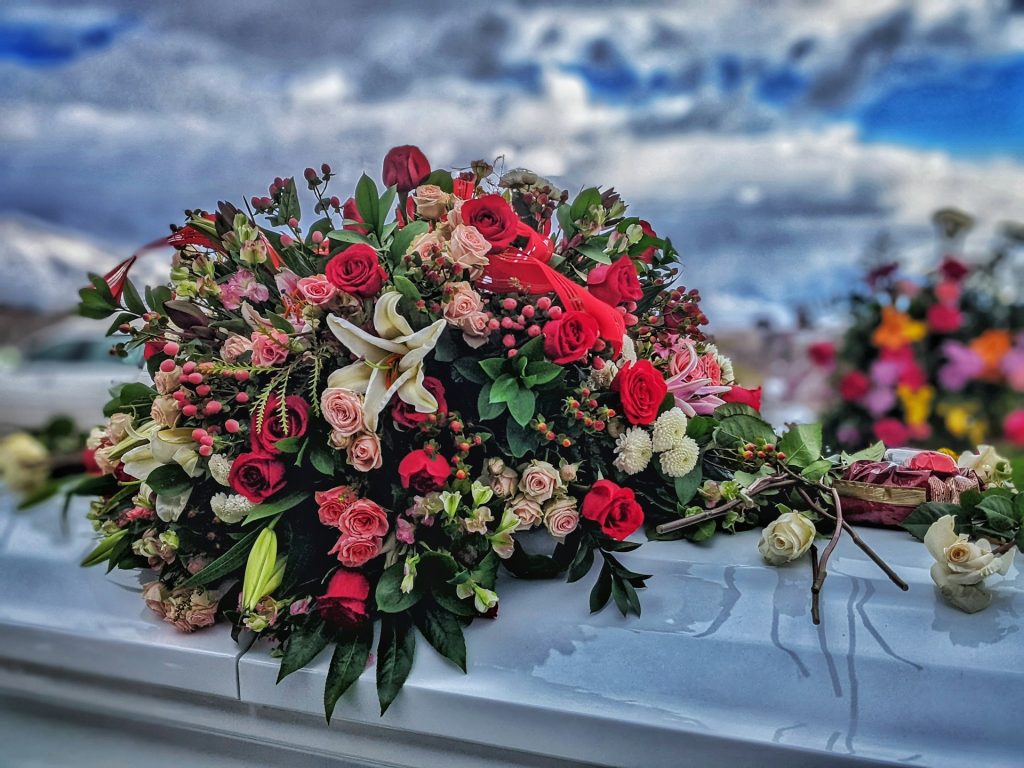
Choosing flowers for a funeral is a deeply personal decision. Families often want an arrangement that looks respectful, reflects the personality of the person who has passed away, and provides a fitting tribute during the service. With so many flowers, colours and arrangement styles available, making the right choice can sometimes feel difficult.
Coffin sprays are designed to be placed directly over the coffin, making them one of the most prominent floral tributes at a funeral. Because they are displayed so visibly, families may want to consider more than simply which flowers look attractive. The size, shape, colour scheme and symbolism of the flowers can all influence how the arrangement feels.
There is no single correct way to choose a funeral arrangement. Personal preferences, cultural traditions, religious customs and the type of funeral service can all play a role. Taking some time to consider these factors can help families select a tribute that feels appropriate and meaningful.
Understanding the Purpose of a Coffin Spray
A coffin spray is a floral arrangement specifically designed to rest on top of a coffin or casket. Unlike smaller bouquets or wreaths, it is generally created with the shape and dimensions of the coffin in mind.
The arrangement may cover part or most of the upper surface, depending on its size and design. Some families prefer a substantial floral display, while others choose a smaller arrangement that leaves more of the coffin visible.
These arrangements serve both a practical and symbolic purpose. They provide a focal point during the funeral service while also representing remembrance, love and respect.
Florists can usually create different styles according to the family’s preferences. This may include traditional arrangements, contemporary designs, simple floral coverings or fuller displays using several complementary flowers.
Consider the Person Being Remembered
One of the most meaningful ways to approach funeral flowers is to think about the person rather than simply choosing the most popular arrangement.
Their favourite flowers, preferred colours or general personality can provide useful inspiration. Someone who enjoyed gardening, for example, may have appreciated a natural-looking arrangement featuring flowers associated with their garden.
Families may also choose flowers based on memories. A particular flower might remind relatives of a special occasion, a favourite place or an important period in the person’s life.
When making the choice, consider:
- Which flowers did the person particularly enjoy?
- Were there colours, plants or seasonal flowers that had special meaning?
- Would a traditional or more contemporary arrangement better reflect their personality?
- Are there cultural or family traditions that should be incorporated?
The result does not have to follow a strict formula. A personal detail can make the tribute feel more connected to the individual.
Choosing Flowers and Colours
Flowers can carry different associations, although their meanings are not universal. White flowers are often associated with peace, remembrance and reverence, while soft pinks can create a gentle and affectionate appearance. Other colours may be selected simply because they were meaningful to the person.
Roses, lilies, chrysanthemums, carnations and other popular funeral flowers can all be incorporated into suitable arrangements. The choice often depends on availability, seasonality, design preferences and the desired appearance.
Colour combinations are also worth considering. A monochromatic arrangement can look understated and elegant, while several complementary shades can create a more expressive display.
There is no requirement to choose only white or pale flowers. Bright colours can be appropriate when they reflect the personality of the person being remembered or represent positive memories shared by the family.
Think About the Coffin Size and Arrangement Shape
The proportions of the floral tribute should work with the coffin rather than overwhelming it. A very large arrangement may not be suitable for every service, while an arrangement that is too small may not create the appearance the family had in mind.
Experienced florists can advise on proportions and positioning. They can also explain how different designs will sit on the coffin and whether a particular shape is appropriate.
A traditional full-length arrangement creates a formal appearance. Smaller sprays can provide a more restrained presentation, particularly when the family wants other floral tributes to remain visible around the coffin.
Families should also consider the setting of the funeral. A large church, chapel or outdoor venue may create a different visual impression from a smaller memorial setting.
Consider Cultural and Religious Traditions
Funeral customs vary considerably between families, cultures and religions. Flowers that are appropriate in one setting may have a different meaning in another.
Some traditions have specific preferences regarding flowers, colours or funeral arrangements. Others may place greater emphasis on simplicity or particular types of floral tribute.
Before placing an order, it can be helpful to check whether there are any relevant customs that should be respected. Family members may also have different expectations, so discussing these considerations early can prevent misunderstandings.
Where a religious or cultural requirement is particularly important, a florist with experience handling funeral arrangements can help explain available options without making assumptions about what the family should choose.
Decide How Formal or Personal the Arrangement Should Be
The overall style of a funeral tribute can range from highly traditional to distinctly personal. Some families prefer an arrangement that looks formal and understated, while others want something that reflects the person’s hobbies, interests or character.
A more traditional design might use symmetrical flowers and restrained colours. A personalised arrangement may use particular blooms, unusual colour combinations or a less conventional shape.
Personalisation does not necessarily mean creating an elaborate arrangement. Sometimes a simple choice of flower is enough to make the tribute meaningful.
Families should consider what feels appropriate for the person, the service and those attending. Funeral flowers are ultimately a form of remembrance, so the arrangement should feel genuine rather than chosen purely because it is fashionable.
Discuss Practical Details With the Florist
A funeral florist will usually need several details before recommending a suitable arrangement. Providing accurate information can make the ordering process easier and reduce the possibility of last-minute changes.
It is useful to discuss the following:
- The date, time and location of the funeral service.
- The coffin or casket size, where relevant.
- Preferred flowers and colours.
- The approximate budget.
- Whether the arrangement should be full-length or more compact.
- Any cultural, religious or family preferences.
- Whether additional flowers will be placed around the coffin or at the venue.
Families should also ask how the arrangement will be delivered and positioned. Funeral schedules can be tightly organised, so confirming delivery arrangements in advance is particularly important.
Set a Realistic Budget
Funeral expenses can add up quickly, and flowers are only one part of the overall cost. Setting a budget before choosing the arrangement can help families make decisions without unnecessary financial pressure.
The price of a coffin spray can depend on factors such as the size of the arrangement, flower selection, seasonal availability, design complexity and the amount of foliage used.
Some flowers may also be more expensive or difficult to source at certain times of year. A florist can often suggest alternatives that provide a similar colour or overall appearance while keeping the arrangement within the family’s budget.
It is worth asking what is included in the quoted price. Depending on the florist, delivery, setup and other services may be handled separately.
Consider Flower Availability and Seasonality
Not every flower is available in the same condition throughout the year. Seasonal availability can influence both the price and the selection offered by a florist.
Choosing flowers that are naturally available during the relevant season may provide practical advantages. They may be easier to source and can sometimes offer better value.
This does not mean families have to abandon their preferred flower. Florists may have access to alternatives or suppliers who can source specific varieties when necessary.
If a particular flower is especially important, mention it when making the enquiry rather than waiting until the arrangement is being finalised.
Think About the Overall Funeral Setting
The coffin spray is only one part of the visual setting at a funeral. There may also be standing wreaths, bouquets, urn arrangements, photographs and other floral tributes.
Considering the entire setting can help prevent the flowers from appearing disconnected. For example, families may choose colours that complement other arrangements without making every floral tribute identical.
The venue can also influence the choice. A large arrangement may have a strong presence in a spacious chapel, while a more compact design may be better suited to a smaller room.
Lighting, surrounding colours and the position of the coffin can all affect how flowers appear during the service.
Give Yourself Enough Time
Arranging funeral flowers at short notice is sometimes unavoidable, but providing a florist with as much notice as possible can make the process easier.
Advance planning gives the florist more opportunity to discuss options, source particular flowers and prepare the arrangement carefully. It also gives family members time to agree on the style and budget.
When time is limited, providing the essential information immediately can help. The funeral date, location, preferred colours, desired arrangement size and budget are particularly useful starting points.
A reputable florist should also be able to explain what options are realistically available within the timeframe.
Making a Choice That Feels Appropriate
There is no universal standard for the perfect funeral arrangement. What matters most is that the flowers are appropriate for the circumstances and meaningful to the people who are saying goodbye.
For some families, coffin sprays will feature traditional white flowers and a simple design. Others may choose colourful blooms that reflect a lively personality or include flowers associated with treasured memories.
The decision can be guided by practical considerations as well as emotion. Budget, availability, venue, cultural expectations and delivery arrangements all deserve attention, but these factors do not have to make the process complicated.
Taking the time to discuss the options with an experienced florist can help families understand what is possible and choose an arrangement with confidence. A thoughtful floral tribute does not need to follow a particular trend. It simply needs to provide a respectful and fitting expression of remembrance.