
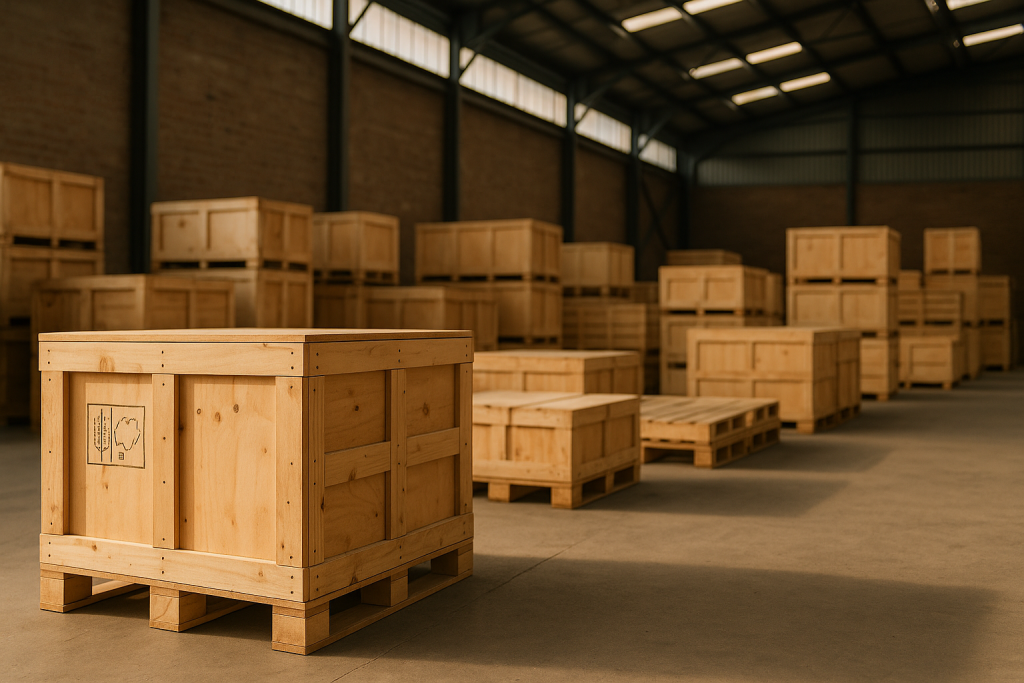
Wooden packaging isn’t just something to tick off your export checklist. For small to mid-sized businesses in South Africa looking to send products abroad, the choice of manufacturer can determine whether your goods arrive safely, on time, and meet every compliance requirement. Let’s break down how to pick a wooden packaging partner that will help your products clear customs, survive the journey, and reinforce your reputation with buyers across the world.
Why manufacturer selection matters for exports
Export packaging is about more than a sturdy crate. It must protect against moisture, pests, and rough handling, but also pass international inspections and certification requirements like ISPM 15, which mandates heat treatment for wood packaging to prevent pest transmission. If your packaging fails inspection, your shipment can be delayed, fined, or rejected outright. That’s why your manufacturer must have experience with export regulations and provide stamped, compliant packaging on time.
What should you expect from a top wooden packaging manufacturer?
- Compliance as standard: Look for ISPM 15 certification (with a clear, traceable stamp), familiarity with EU and US import rules, and documented quality checks.
- Sustainable sourcing: Responsible manufacturers use timber from sustainably managed forests and minimise waste during production, which can help meet the sustainability demands of buyers in Europe and beyond.
- Tailored designs: Skilled manufacturers ask the right questions about your product size, fragility, and transportation method. They design custom crates, pallets, or boxes that fit your product and reduce the risk of breakage.
- After-sale support: Leading companies will help troubleshoot issues like customs queries or damaged shipments — and they do it even after your goods have shipped.
How do you assess a manufacturer’s reputation?
There’s no true shortcut here, but a few steps help you avoid costly mistakes:
- Ask for export client references (actual company names, not just testimonials on a website).
- Request proof of ISPM 15 certification and, if possible, visit the manufacturing facility to see their process firsthand.
- Check if they are a member of industry organisations like the South African Wood Preservers Association (SAWPA) or similar bodies.
- Review sample packaging for your product — are fixings, wood grade, and finish up to par?
- Probe their knowledge: how do they handle extra-large, fragile, or high-value shipments? What’s their track record on urgent orders?
Can they really customise to your business needs?
Any manufacturer can promise customisation, but you need specifics. For example, a Johannesburg-based electronics exporter reported zero breakage over two years after switching to a local packaging firm that built cushioned, reusable crates for sensitive equipment. Another, in Cape Town, saw shipment delays drop dramatically after changing to a supplier who provided immediate documentation with each load, simplifying border crossings into the EU.
The bottom line: don’t just take the lowest quote. Insist on proof of experience, compliance, real customisation, and environmental responsibility. Your shipment depends on it.
FAQ: key questions about wooden packaging for export
What certification should export packaging have?
All wood packaging for international exports from South Africa should be treated and stamped with ISPM 15 certification. This is recognised worldwide and is essential for most markets.
Can manufacturers supply packaging for different products?
Yes, experienced manufacturers can design crates, pallets, and boxes for machinery, produce, fragile goods, and more. Always ask to see examples of previous work in your product category.
How much lead time is needed for custom wooden packaging?
This depends on complexity, but plan for at least two weeks from design approval to delivery. Emergency orders are possible, but often come at a premium.
TL;DR: Choosing the right wooden packaging supplier
- Always check for ISPM 15 compliance and genuine export experience.
- Evaluate responsible sourcing and their ability to offer fully customised solutions.
- Ask for client references and visit the facility whenever possible.
- Consider the full cost, including the risk of delays or damage — not just the upfront price.
Every export is a test of your reliability. Start by packing it right, with the right partner.